Apple is negotiating with CXMT and YMTC, both on the Pentagon's 1260H list, to source memory chips for China-market devices, after hiking Mac and iPad prices up to $200 on June 25 in response to an AI-driven memory shortage.

Energy Secretary Chris Wright issued two emergency orders on June 30 under Section 202(c) of the Federal Power Act, authorizing PJM to force AI data centers and large loads onto backup diesel generators through July 3 as the grid approaches a projected all-time peak of 166,304 MW.

Stargate's $500B AI infrastructure push has locked in nearly 7 gigawatts of planned U.S. capacity across six campuses. The grid math is already hurting Bitcoin miners.

Sunrun, Tesla, and Renew Home announced a framework to aggregate more than 16 GW of home batteries and smart thermostats into a virtual power plant targeting AI data center demand. No offtake agreements exist yet, and roughly 60% of the capacity is demand response, not firm generation.
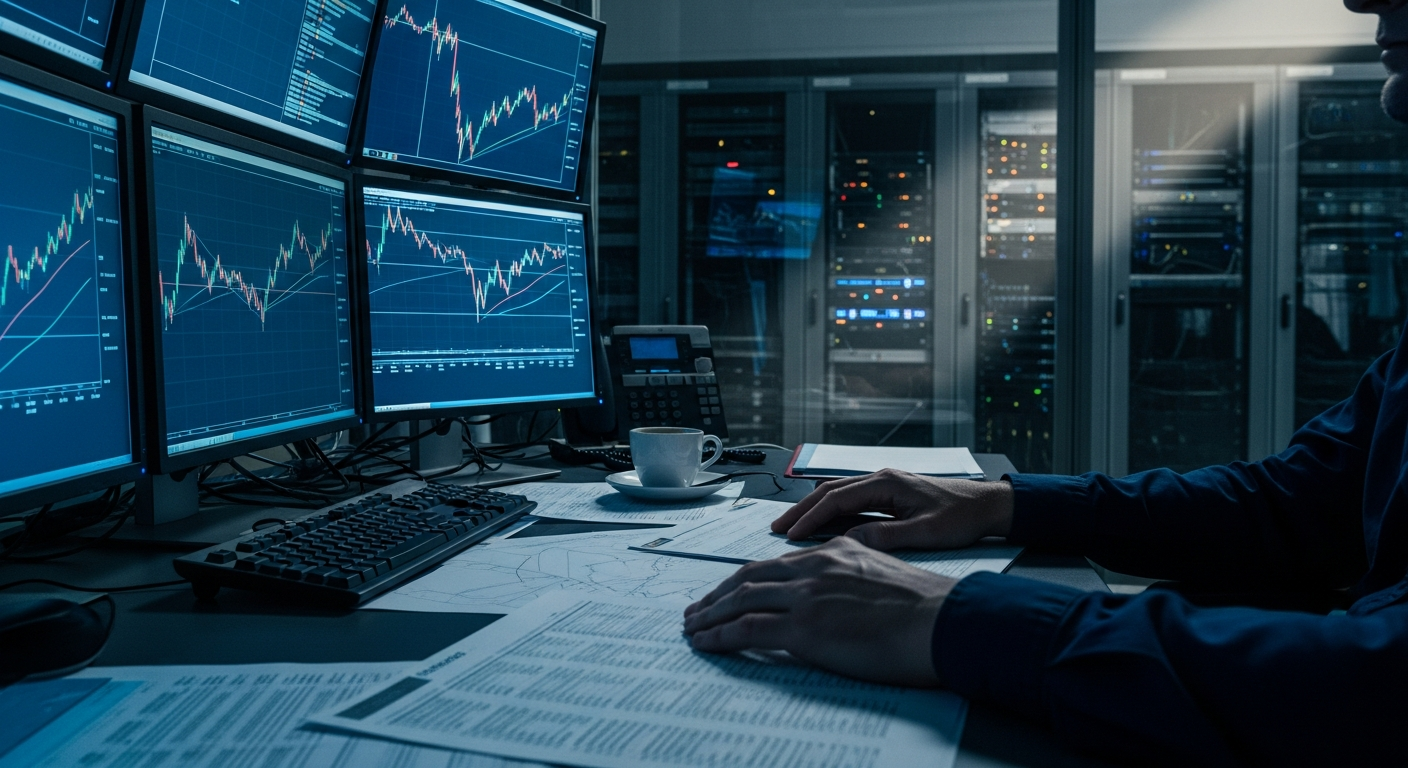
The BEA's final Q1 2026 GDP estimate shows AI data center equipment and software investment carried roughly 74% of all U.S. economic growth in the first quarter, while consumer spending contributed less than a fifth of the headline number.

Arthur Hayes argues the $1.5 trillion AI capex debt wave absorbed the entire U.S. M2 expansion since November 2022, explaining Bitcoin's underperformance. His thesis: when the bubble cracks, the rescue print has nowhere to go but Bitcoin.

LM Funding America announced June 23 it is pivoting its 26 MW of Bitcoin mining infrastructure in Oklahoma and Mississippi toward AI and high-performance computing, ordering initial GPU hardware and marketing up to 10 MW for co-location customers.

Chainalysis data shows the economic weight of machine-to-machine payments has shifted decisively toward larger-value transfers on the x402 protocol. The demand for permissionless money rails is proven. The settlement currency is not Bitcoin.

President Trump signed an executive order on June 22, 2026 mandating federal agencies migrate to post-quantum cryptography by Dec. 31, 2030. Bitcoin developers have been building toward that same standard since February.

Microsoft Threat Intelligence disclosed a clipboard-hijacking worm targeting Bitcoin, Tron, and Monero wallets across Windows machines. It spreads via USB, exfiltrates over Tor, and has been running since at least February 2026.

Institutions want a post-quantum roadmap for Bitcoin by 2029. Sitting around a table at Pubkey, Ryan Gentry, Thomas Pacchia, and Christian Langalis sort the real engineering, BIP-360 and the BIP-361 freeze debate, from the FUD, and land on a familiar answer: the cryptographers will figure it out.

The $5 wrench attack is the one threat a hardware wallet alone can't solve. Bitkey's Max Guise on what actually protects your bitcoin when someone shows up at your door: privacy, distributed keys, and a time-lock vault that makes your coins un-moveable long enough that hostage-taking stops paying.

Fund manager John Tinsman screens for the highest-growth, lowest-marginal-cost companies on the market, and his read on AI is blunt: the data-center economics are some of the best he has seen, the token shortage is the real story, and the build-out is barely a year into a decade-long cycle.

Cashu creator Calle joins the show on the future of digital cash: why physical cash is disappearing, how Chaumian ecash on Bitcoin answers the surveillance dollar, the honest custodial trade-off, and why financial privacy is the fight that decides the rest.