

Metaplanet crossed 43,000 BTC on July 2 after a $170.7M Q2 buy, cementing its rank as the world's third-largest corporate Bitcoin treasury and demonstrating how its income-generation model keeps acquisition cost below spot.

Glassnode's 'Accumulation Beneath the Surface' report identifies a structural split: long-term Bitcoin holders are quietly stacking while institutional ETF investors stay in defensive mode after the worst monthly outflow since the products launched.

Tyler Stevens and Dylan Seib of Exergy join me to lay out the full home mining playbook: useful miner framework, building brain automation, hardware sizing, and how to get the bitcoin into your wallet, non-KYC, on-chain or Lightning.
Peter St. Onge on why the AI bubble still has a year or more to run, why blue-collar workers are the surprise winners of the AI era, and why Kevin Warsh's let-companies-fail Fed stance is exactly what the economy needs.
Nick Nemeth returns to break down private credit defaults already running at 2008 levels, the Apollo/Athene insurance structure, the Saudi-Norway debt chain, and why Bitcoin is the only monetary system that actually prices failure.
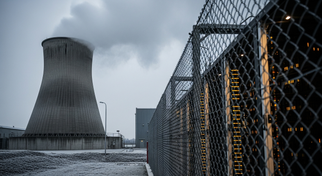
Nvidia and Valar Atomics ran Blackwell AI chips off the Ward 250 microreactor in Utah on July 1, claiming the first-ever small reactor to power a data center. The real story: AI capex is now energy-constrained, and the industry is going behind the meter to escape the grid.

Andreessen Horowitz is arguing publicly that open-source AI must stay permissionless. More than 54 local moratoriums have already passed. The regulatory playbook is the same one Bitcoiners lived through.
Foreign investors pulled an estimated $57 billion from South Korean equities in May and June combined, sending the won toward 17-year lows and triggering a liquidity crunch built on three overlapping leverage layers. The Bank of Korea has no clean exit.
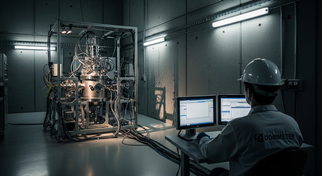
The DOE confirmed three advanced microreactors achieved criticality before July 4th, 2026, fulfilling EO 14301. Deployable Energy's Unity went from kickoff to critical in roughly 150 days on a single-digit million dollar budget.

Apple is negotiating with CXMT and YMTC, both on the Pentagon's 1260H list, to source memory chips for China-market devices, after hiking Mac and iPad prices up to $200 on June 25 in response to an AI-driven memory shortage.

BPI tracks the anti-data-center ground game while Claude Code and Fable 5 show the same AI conflict at the model-access layer. Plus bitcoin probes $58k, global liquidity shifts, and citizenship becomes a legitimacy fight.

Christopher Delgado, CEO of Goliath Ventures, pleaded guilty July 1 to wire fraud and money laundering, admitting to at least $250M in losses from a fake crypto liquidity pool scheme that raised over $400M from more than 1,000 investors.
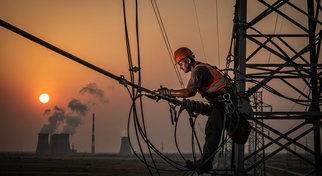
Energy Secretary Chris Wright issued two emergency orders on June 30 under Section 202(c) of the Federal Power Act, authorizing PJM to force AI data centers and large loads onto backup diesel generators through July 3 as the grid approaches a projected all-time peak of 166,304 MW.

The Dutch Public Prosecution Service petitioned a Rotterdam court to declare Knaken Cryptohandel B.V. bankrupt on June 30, 2026, citing public interest, weeks after the unlicensed exchange went dark and locked roughly 30,000 customers out of their holdings.